
1688 平台店铺全商品接口技术实现:从店铺页解析到分页采集全方案
本文系统阐述了1688店铺全商品数据采集的技术方案,重点解决店铺ID解析、多页数据采集和品类筛选等核心问题。方案包含店铺信息解析器、商品分页参数生成器、请求调度器和数据解析器等组件,支持按分类采集商品并处理批发价、起订量等B端特色字段。通过控制请求频率(单店铺间隔15秒)、采用代理轮换和会话保持等策略应对反爬限制,严格遵循平台数据采集规范。该技术方案为供应链分析和竞品调研提供数据支持,但强调必须获
1688 店铺商品数据是供应链分析、竞品调研的重要基础,包含店铺所有商品的批发价、起订量、品类分布等核心信息。与单商品接口不同,店铺全商品接口需要处理分页加载、品类筛选、防反爬限制等特殊问题。本文系统讲解 1688 店铺所有商品接口的技术实现,重点解决店铺 ID 解析、多页数据采集、品类筛选等核心问题,提供一套合规、高效的技术方案,严格遵循平台规则与数据采集规范。
一、1688 店铺商品接口架构与合规要点
1688 店铺商品数据通过 "店铺首页→商品列表页→分页加载" 的层级架构展示,核心接口为店铺商品列表分页接口,支持按品类、销量等维度筛选。实现需遵守以下合规要点:
- 请求频率控制:单店铺采集时,页面请求间隔不低于 15 秒,单店铺单日最多采集 3 次
- 数据范围限制:仅采集公开的商品信息,不涉及店铺交易数据、客户信息等隐私内容
- 商业用途合规:数据仅用于市场调研,不得用于恶意竞争或商业诋毁
- 反爬机制尊重:不伪造请求头或破解接口加密,模拟正常用户浏览行为
店铺全商品采集核心技术流程:
plaintext
店铺ID解析 → 首页品类提取 → 分页参数构造 → 分布式请求调度 → 数据解析与去重 → 结构化存储
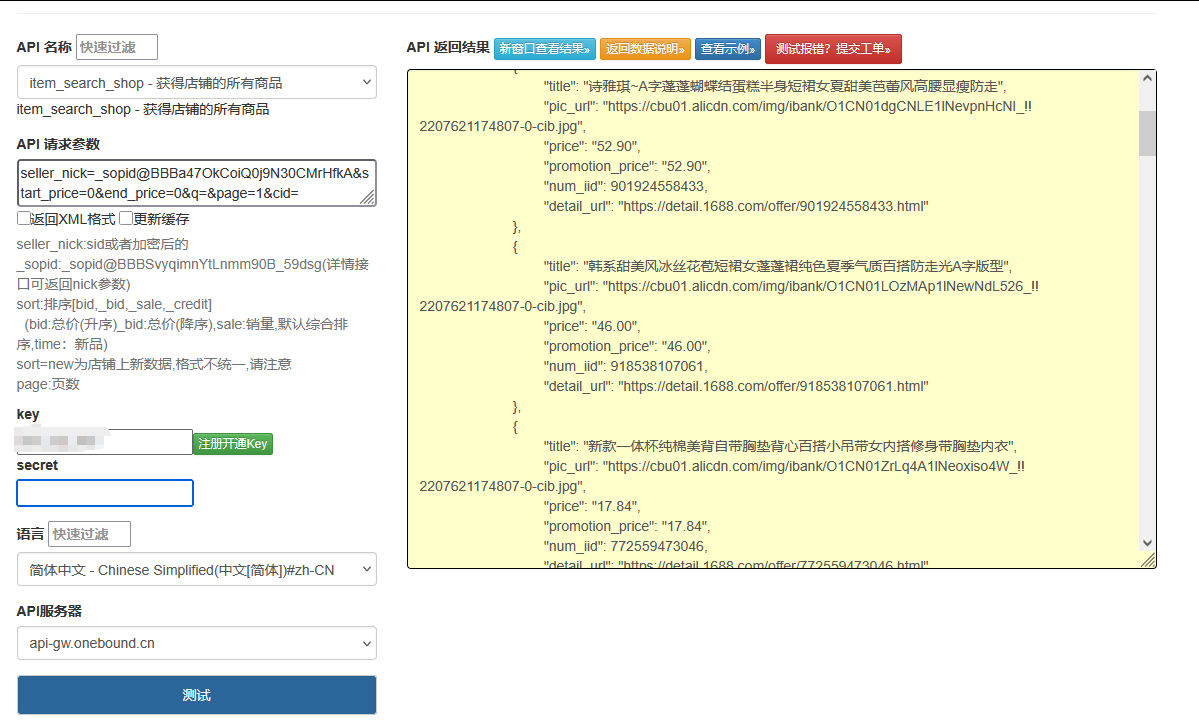
点击获取key和secret
二、核心技术实现
1. 店铺 ID 与信息解析器(适配 1688 店铺 URL 特色)
1688 店铺 URL 格式多样,需从不同格式的 URL 中解析店铺 ID(memberId),并提取基础信息:
python
运行
import re
import requests
from lxml import etree

class AlibabaShopParser:
    """1688店铺信息与ID解析器"""

    def __init__(self):
        self.headers = {
            "User-Agent": "Mozilla/5.0 (Windows NT 10.0; Win64; x64) AppleWebKit/537.36 (KHTML, like Gecko) Chrome/124.0.0.0 Safari/537.36",
            "Accept": "text/html,application/xhtml+xml,application/xml;q=0.9,*/*;q=0.8",
            "Referer": "https://www.1688.com/"
        }
        # 店铺URL匹配模式
        self.shop_patterns = [
            r"https?://(\w+)\.1688\.com",  # 主域名模式:https://abc123.1688.com
            r"https?://shop(\d+)\.1688\.com",  # 数字ID模式:https://shop123456789.1688.com
            r"https?://www\.1688\.com/shop/view_shop\.htm\?memberId=(\w+)"  # 标准店铺页
        ]

    def extract_shop_id(self, shop_url):
        """从店铺URL提取memberId(店铺唯一标识)"""
        for pattern in self.shop_patterns:
            match = re.search(pattern, shop_url)
            if match:
                return match.group(1)

        # URL直接解析失败,尝试从页面内容提取
        return self._extract_id_from_page(shop_url)

    def _extract_id_from_page(self, shop_url):
        """从店铺页面内容提取memberId"""
        try:
            response = requests.get(
                shop_url,
                headers=self.headers,
                timeout=15,
                allow_redirects=True
            )
            response.encoding = "utf-8"

            # 从meta标签提取
            tree = etree.HTML(response.text)
            member_id_meta = tree.xpath('//meta[@name="memberId"]/@content')
            if member_id_meta and member_id_meta[0]:
                return member_id_meta[0]

            # 从脚本标签提取
            scripts = tree.xpath('//script/text()')
            for script in scripts:
                match = re.search(r'memberId\s*[:=]\s*["\'](\w+)["\']', script)
                if match:
                    return match.group(1)

            return None
        except Exception as e:
            print(f"页面提取店铺ID失败: {str(e)}")
            return None

    def get_shop_base_info(self, shop_url):
        """获取店铺基础信息(名称、主营类目等)"""
        try:
            response = requests.get(
                shop_url,
                headers=self.headers,
                timeout=15
            )
            response.encoding = "utf-8"
            tree = etree.HTML(response.text)

            # 提取店铺名称
            shop_name = tree.xpath('//h1[@class="shop-name"]/text()')
            shop_name = shop_name[0].strip() if shop_name else ""

            # 提取主营类目
            main_category = tree.xpath('//div[contains(text(), "主营产品")]/following-sibling::div/text()')
            main_category = main_category[0].strip() if main_category else ""

            # 提取经营年限
            years = tree.xpath('//div[contains(@class, "year")]/text()')
            years = years[0].strip() if years else "未知"

            # 提取诚信通等级
            credit_level = tree.xpath('//div[contains(@class, "credit-level")]/@title')
            credit_level = credit_level[0].strip() if credit_level else "未评级"

            return {
                "shop_url": shop_url,
                "member_id": self.extract_shop_id(shop_url),
                "shop_name": shop_name,
                "main_category": main_category,
                "operation_years": years,
                "credit_level": credit_level
            }
        except Exception as e:
            print(f"获取店铺信息失败: {str(e)}")
            return None

    def get_shop_categories(self, member_id):
        """获取店铺商品分类(用于筛选采集)"""
        if not member_id:
            return None

        category_url = f"https://{member_id}.1688.com/page/offerlist.htm"
        try:
            response = requests.get(
                category_url,
                headers=self.headers,
                timeout=15
            )
            response.encoding = "utf-8"
            tree = etree.HTML(response.text)

            # 提取分类列表
            categories = []
            cat_elements = tree.xpath('//div[@class="filter-sort-item"]//a[@class="filter-item"]')
            for elem in cat_elements[1:]:  # 跳过"全部"
                cat_name = elem.xpath('./text()')[0].strip() if elem.xpath('./text()') else ""
                cat_url = elem.xpath('./@href')[0].strip() if elem.xpath('./@href') else ""

                # 提取分类ID
                cat_id = ""
                match = re.search(r'categoryId=(\d+)', cat_url)
                if match:
                    cat_id = match.group(1)

                if cat_name and cat_id:
                    categories.append({
                        "category_id": cat_id,
                        "category_name": cat_name,
                        "url": cat_url
                    })

            return categories
        except Exception as e:
            print(f"获取店铺分类失败: {str(e)}")
            return None
2. 店铺商品分页参数生成器(处理 B 端分页逻辑)
1688 店铺商品采用特殊的分页机制,不同排序方式和筛选条件对应不同的参数规则:
python
运行
import time
import random
import hashlib
import urllib.parse

class AlibabaShopProductParamsGenerator:
    """1688店铺商品分页参数生成器"""

    def __init__(self):
        self.base_url = "https://offerlist.1688.com/offerlist.htm"
        # 排序方式映射
        self.sort_mapping = {
            "default": "",           # 默认排序
            "newest": "create_desc", # 最新上架
            "price_asc": "price_asc", # 价格从低到高
            "price_desc": "price_desc", # 价格从高到低
            "sales": "volume_desc"   # 销量从高到低
        }

    def generate_params(self, member_id, page=1, sort="default", category_id="", **filters):
        """
        生成店铺商品列表请求参数

        :param member_id: 店铺memberId
        :param page: 页码
        :param sort: 排序方式
        :param category_id: 分类ID(空表示全部)
        :param filters: 筛选条件,支持:
            - min_price: 最低价格
            - max_price: 最高价格
            - is_wholesale: 是否批发(True/False)
        :return: 完整参数字典
        """
        params = {
            "memberId": member_id,
            "pageNum": page,
            "pageSize": 60,  # 每页最大商品数
            "sortType": self.sort_mapping.get(sort, ""),
            "categoryId": category_id,
            "offline": "false",  # 只显示在线商品
            "sample": "false",   # 不显示样品
            "isNoReload": "true",
            "enableAsync": "true",
            "async": "true",
            "_input_charset": "UTF-8",
            "timestamp": str(int(time.time() * 1000)),
            "rn": str(random.randint(1000000000, 9999999999))
        }

        # 添加价格筛选
        if "min_price" in filters and filters["min_price"]:
            params["priceStart"] = filters["min_price"]
        if "max_price" in filters and filters["max_price"]:
            params["priceEnd"] = filters["max_price"]

        # 添加批发筛选
        if "is_wholesale" in filters and filters["is_wholesale"]:
            params["wholesale"] = "true"

        # 生成签名(部分接口需要)
        if random.random() > 0.5:  # 模拟部分请求需要签名的场景
            params["sign"] = self._generate_sign(params)

        return params

    def _generate_sign(self, params):
        """生成参数签名"""
        # 按参数名排序
        sorted_params = sorted(params.items(), key=lambda x: x[0])
        # 拼接签名字符串
        sign_str = "&".join([f"{k}={urllib.parse.quote(str(v), safe='')}" for k, v in sorted_params])
        # 添加固定密钥(模拟)
        sign_str += "&secret=shop_product_demo_key"
        # MD5加密
        return hashlib.md5(sign_str.encode()).hexdigest().upper()

    def get_list_url(self, params):
        """生成完整的商品列表URL"""
        return f"{self.base_url}?{urllib.parse.urlencode(params)}"
3. 店铺商品请求调度器(应对 B 端反爬限制)
1688 对店铺商品批量采集有严格的反爬限制,需实现会话保持、代理轮换、请求间隔控制等策略:
python
运行
import time
import random
import requests
from fake_useragent import UserAgent
import urllib3

# 禁用不安全请求警告
urllib3.disable_warnings(urllib3.exceptions.InsecureRequestWarning)

class AlibabaShopProductRequester:
    """1688店铺商品请求调度器"""

    def __init__(self, proxy_pool=None):
        self.proxy_pool = proxy_pool or []
        self.ua = UserAgent()
        self.session = self._init_session()
        self.last_request_time = 0
        self.min_interval = 15  # 页面请求最小间隔(秒)
        self.max_retries = 3    # 最大重试次数

    def _init_session(self):
        """初始化会话,获取基础Cookie"""
        session = requests.Session()
        session.headers.update({
            "User-Agent": self.ua.random,
            "Accept": "text/html,application/xhtml+xml,application/xml;q=0.9,*/*;q=0.8",
            "Accept-Language": "zh-CN,zh;q=0.9",
            "Connection": "keep-alive",
            "Referer": "https://www.1688.com/",
            "Upgrade-Insecure-Requests": "1"
        })
        # 预访问1688首页获取必要Cookie
        session.get("https://www.1688.com", verify=False, timeout=10)
        return session

    def _rotate_user_agent(self):
        """轮换User-Agent"""
        self.session.headers["User-Agent"] = self.ua.random

    def _get_proxy(self):
        """获取可用代理"""
        if not self.proxy_pool:
            return None

        # 随机选择代理并验证
        proxy = random.choice(self.proxy_pool)
        try:
            test_url = "https://www.1688.com"
            response = requests.get(
                test_url,
                proxies={"https": proxy},
                timeout=5,
                verify=False
            )
            if response.status_code == 200:
                return proxy
            else:
                if proxy in self.proxy_pool:
                    self.proxy_pool.remove(proxy)
                return self._get_proxy() if self.proxy_pool else None
        except:
            if proxy in self.proxy_pool:
                self.proxy_pool.remove(proxy)
            return self._get_proxy() if self.proxy_pool else None

    def _control_request_interval(self):
        """控制请求间隔,避免触发反爬"""
        current_time = time.time()
        elapsed = current_time - self.last_request_time

        if elapsed < self.min_interval:
            sleep_time = self.min_interval - elapsed + random.uniform(2, 5)
            print(f"请求间隔不足,休眠 {sleep_time:.1f} 秒")
            time.sleep(sleep_time)

        self.last_request_time = time.time()

    def fetch_shop_products_page(self, params, retry_count=0):
        """
        获取店铺商品列表页面

        :param params: 请求参数
        :param retry_count: 当前重试次数
        :return: 页面HTML内容或None
        """
        # 控制请求频率
        self._control_request_interval()
        # 轮换User-Agent
        self._rotate_user_agent()

        # 获取代理
        proxy = self._get_proxy()
        proxies = {"https": proxy} if proxy else None

        try:
            response = self.session.get(
                "https://offerlist.1688.com/offerlist.htm",
                params=params,
                proxies=proxies,
                timeout=20,
                verify=False,
                allow_redirects=True
            )

            # 检查状态码
            if response.status_code != 200:
                if retry_count < self.max_retries:
                    print(f"请求失败,状态码: {response.status_code},重试 {retry_count+1}/{self.max_retries}")
                    return self.fetch_shop_products_page(params, retry_count + 1)
                return None

            # 检查是否被反爬拦截
            if self._is_blocked(response.text):
                print("请求被反爬机制拦截")
                # 重置会话
                self.session = self._init_session()
                if retry_count < self.max_retries:
                    print(f"更换会话重试 {retry_count+1}/{self.max_retries}")
                    return self.fetch_shop_products_page(params, retry_count + 1)
                return None

            return response.text

        except Exception as e:
            print(f"请求异常: {str(e)}")
            if retry_count < self.max_retries:
                print(f"重试 {retry_count+1}/{self.max_retries}")
                return self.fetch_shop_products_page(params, retry_count + 1)
            return None

    def _is_blocked(self, html_content):
        """判断是否被反爬拦截"""
        block_keywords = [
            "请输入验证码",
            "访问过于频繁",
            "安全验证",
            "系统繁忙,请稍后再试",
            "您的操作过于频繁"
        ]
        for keyword in block_keywords:
            if keyword in html_content:
                return True
        return False
4. 店铺商品数据解析器(提取 B 端特色字段)
解析店铺商品列表页面,提取包含批发价、起订量、销量等 B 端特色数据,并处理分页信息:
python
运行
import re
import json
from datetime import datetime
from lxml import etree

class AlibabaShopProductParser:
    """1688店铺商品数据解析器"""

    def __init__(self):
        # 匹配商品数据的正则表达式
        self.product_data_pattern = re.compile(r'window\.__page__data__\s*=\s*({.*?});\s*</script>', re.DOTALL)
        self.offer_list_pattern = re.compile(r'offerList\s*:\s*(\[.*?\])', re.DOTALL)

    def parse_products_page(self, html_content):
        """解析店铺商品列表页面"""
        if not html_content:
            return None

        # 尝试从页面提取JSON数据
        json_data = self._extract_json_data(html_content)
        if json_data:
            return self._parse_from_json(json_data)

        # JSON解析失败,尝试从HTML解析
        return self._parse_from_html(html_content)

    def _extract_json_data(self, html_content):
        """从页面提取JSON数据"""
        match = self.product_data_pattern.search(html_content)
        if match:
            try:
                return json.loads(match.group(1))
            except json.JSONDecodeError:
                print("JSON数据解析失败")

        # 尝试提取简化的商品列表数据
        match = self.offer_list_pattern.search(html_content)
        if match:
            try:
                return {"offerList": json.loads(match.group(1))}
            except json.JSONDecodeError:
                print("商品列表数据解析失败")

        return None

    def _parse_from_json(self, json_data):
        """从JSON数据解析商品信息"""
        # 提取分页信息
        pagination = self._parse_pagination(json_data)

        # 提取商品列表
        products = []
        offer_list = json_data.get("offerList", [])
        if not offer_list:
            offer_list = json_data.get("data", {}).get("offerList", [])

        for item in offer_list:
            # 解析价格信息
            price_info = self._parse_price(item)

            # 解析销量信息
            sales_info = self._parse_sales(item)

            products.append({
                "offer_id": str(item.get("offerId", "")),
                "title": item.get("title", "").strip(),
                "main_image": item.get("imageUrl", ""),
                "price": price_info,
                "min_order": item.get("minOrderQuantity", "1"),
                "unit": item.get("unit", "件"),
                "sales": sales_info,
                "category": item.get("categoryName", ""),
                "detail_url": item.get("detailUrl", ""),
                "is_promotion": "promotionPrice" in item,
                "update_time": item.get("modifyTime", "")
            })

        return {
            "products": products,
            "pagination": pagination,
            "parse_time": datetime.now().strftime("%Y-%m-%d %H:%M:%S")
        }

    def _parse_from_html(self, html_content):
        """从HTML解析商品信息(备用方案)"""
        tree = etree.HTML(html_content)

        # 提取分页信息
        pagination = self._parse_html_pagination(tree)

        # 提取商品列表
        products = []
        product_elements = tree.xpath('//div[contains(@class, "offer-item")]')

        for elem in product_elements:
            # 提取商品ID
            offer_id = ""
            link_elem = elem.xpath('.//a[@class="offer-title"]/@href')
            if link_elem:
                match = re.search(r'offer/(\d+)\.html', link_elem[0])
                if match:
                    offer_id = match.group(1)

            # 提取标题
            title = elem.xpath('.//a[@class="offer-title"]/@title')
            title = title[0].strip() if title else ""

            # 提取价格
            price_text = elem.xpath('.//div[contains(@class, "price")]/text()')
            price_text = price_text[0].strip() if price_text else "0"

            # 提取起订量
            min_order = elem.xpath('.//div[contains(@class, "moq")]/text()')
            min_order = min_order[0].strip() if min_order else "1件"

            products.append({
                "offer_id": offer_id,
                "title": title,
                "price": {"type": "text", "value": price_text},
                "min_order": min_order.split()[0],
                "unit": min_order.split()[-1] if len(min_order.split()) > 1 else "件",
                "main_image": elem.xpath('.//img/@src')[0] if elem.xpath('.//img/@src') else ""
            })

        return {
            "products": products,
            "pagination": pagination,
            "parse_time": datetime.now().strftime("%Y-%m-%d %H:%M:%S")
        }

    def _parse_pagination(self, json_data):
        """从JSON解析分页信息"""
        pagination = json_data.get("pagination", {})
        if not pagination:
            pagination = json_data.get("data", {}).get("pagination", {})

        return {
            "current_page": pagination.get("pageNum", 1),
            "page_size": pagination.get("pageSize", 60),
            "total_pages": pagination.get("totalPage", 0),
            "total_products": pagination.get("totalCount", 0)
        }

    def _parse_html_pagination(self, tree):
        """从HTML解析分页信息"""
        # 提取当前页码
        current_page = tree.xpath('//a[contains(@class, "current")]/text()')
        current_page = int(current_page[0]) if current_page else 1

        # 提取总页数
        total_pages = tree.xpath('//span[contains(@class, "total-page")]/text()')
        if total_pages:
            match = re.search(r'\d+', total_pages[0])
            total_pages = int(match.group()) if match else 0
        else:
            total_pages = 0

        return {
            "current_page": current_page,
            "page_size": 60,
            "total_pages": total_pages,
            "total_products": 0  # HTML中通常不直接显示总商品数
        }

    def _parse_price(self, item):
        """解析价格信息(处理区间价格)"""
        if "price" in item:
            return {
                "type": "fixed",
                "value": float(item.get("price", 0))
            }
        elif "priceRange" in item:
            return {
                "type": "range",
                "min": float(item.get("priceRange", {}).get("minPrice", 0)),
                "max": float(item.get("priceRange", {}).get("maxPrice", 0))
            }
        return {"type": "unknown", "value": 0}

    def _parse_sales(self, item):
        """解析销量信息(B端特色)"""
        if "volume" in item:
            return {
                "count": int(item.get("volume", 0)),
                "unit": item.get("volumeUnit", "件"),
                "period": "30天"  # 1688默认显示30天销量
            }
        return {"count": 0, "unit": "件", "period": ""}

    def remove_duplicates(self, products):
        """去除重复商品(基于offer_id)"""
        seen_ids = set()
        unique_products = []

        for product in products:
            if product["offer_id"] not in seen_ids:
                seen_ids.add(product["offer_id"])
                unique_products.append(product)

        return unique_products
5. 店铺商品分类采集器(按品类批量获取)
实现按店铺内部分类采集商品,支持多分类并行采集与数据合并:
python
运行
import time
from concurrent.futures import ThreadPoolExecutor, as_completed

class AlibabaShopCategoryCollector:
    """1688店铺商品分类采集器"""

    def __init__(self, requester, parser, params_generator):
        self.requester = requester
        self.parser = parser
        self.params_generator = params_generator
        self.max_workers = 2  # 分类采集并发数(不宜过高)

    def collect_by_category(self, member_id, categories, max_pages_per_cat=3):
        """
        按分类采集店铺商品

        :param member_id: 店铺ID
        :param categories: 分类列表(从AlibabaShopParser获取)
        :param max_pages_per_cat: 每个分类最大采集页数
        :return: 合并后的商品列表
        """
        if not categories:
            print("没有分类信息,无法按分类采集")
            return None

        all_products = []
        category_results = {}

        with ThreadPoolExecutor(max_workers=self.max_workers) as executor:
            # 提交分类采集任务
            future_tasks = {}
            for cat in categories:
                future = executor.submit(
                    self._collect_single_category,
                    member_id,
                    cat,
                    max_pages_per_cat
                )
                future_tasks[future] = cat["category_name"]

            # 处理任务结果
            for future in as_completed(future_tasks):
                cat_name = future_tasks[future]
                try:
                    result = future.result()
                    if result and result["products"]:
                        category_results[cat_name] = result
                        all_products.extend(result["products"])
                        print(f"分类 [{cat_name}] 采集完成,获取 {len(result['products'])} 个商品")
                    else:
                        print(f"分类 [{cat_name}] 采集失败或无商品")
                except Exception as e:
                    print(f"分类 [{cat_name}] 采集异常: {str(e)}")

        # 去重并添加分类信息
        unique_products = self.parser.remove_duplicates(all_products)
        for product in unique_products:
            # 为每个商品添加所属分类(简化处理)
            for cat_name, cat_data in category_results.items():
                if product in cat_data["products"]:
                    product["category"] = cat_name
                    break

        return {
            "total_products": len(unique_products),
            "category_counts": {k: len(v["products"]) for k, v in category_results.items()},
            "products": unique_products
        }

    def _collect_single_category(self, member_id, category, max_pages):
        """采集单个分类的商品"""
        cat_id = category["category_id"]
        cat_name = category["category_name"]
        print(f"开始采集分类 [{cat_name}] (ID: {cat_id})")

        all_products = []
        current_page = 1
        total_pages = 1

        while current_page <= max_pages and current_page <= total_pages:
            # 生成参数
            params = self.params_generator.generate_params(
                member_id=member_id,
                page=current_page,
                category_id=cat_id,
                sort="sales"  # 按销量排序
            )

            # 获取页面
            html_content = self.requester.fetch_shop_products_page(params)
            if not html_content:
                print(f"分类 [{cat_name}] 第 {current_page} 页获取失败")
                current_page += 1
                continue

            # 解析页面
            result = self.parser.parse_products_page(html_content)
            if not result:
                print(f"分类 [{cat_name}] 第 {current_page} 页解析失败")
                current_page += 1
                continue

            # 更新分页信息
            total_pages = min(result["pagination"]["total_pages"], max_pages)
            # 添加商品
            all_products.extend(result["products"])

            print(f"分类 [{cat_name}] 第 {current_page}/{total_pages} 页解析完成")
            current_page += 1

            # 分类间添加额外间隔
            time.sleep(random.uniform(5, 10))

        return {
            "category_id": cat_id,
            "category_name": cat_name,
            "products": all_products,
            "total_pages_collected": current_page - 1
        }
三、完整店铺商品采集服务封装
整合上述组件,实现完整的店铺商品采集服务:
python
运行
class AlibabaShopProductService:
    """1688店铺商品完整采集服务"""

    def __init__(self, proxy_pool=None):
        self.shop_parser = AlibabaShopParser()
        self.params_generator = AlibabaShopProductParamsGenerator()
        self.requester = AlibabaShopProductRequester(proxy_pool=proxy_pool)
        self.product_parser = AlibabaShopProductParser()
        self.category_collector = AlibabaShopCategoryCollector(
            self.requester,
            self.product_parser,
            self.params_generator
        )

    def collect_shop_products(self, shop_url, max_pages=5, by_category=False, max_pages_per_cat=3):
        """
        采集店铺所有商品

        :param shop_url: 店铺URL
        :param max_pages: 最大采集页数(全量采集时)
        :param by_category: 是否按分类采集
        :param max_pages_per_cat: 每个分类最大采集页数
        :return: 包含店铺信息和商品列表的字典
        """
        # 1. 获取店铺基础信息
        print("获取店铺基础信息...")
        shop_info = self.shop_parser.get_shop_base_info(shop_url)
        if not shop_info or not shop_info["member_id"]:
            print("无法获取店铺信息,采集终止")
            return None
        member_id = shop_info["member_id"]
        print(f"店铺信息:{shop_info['shop_name']} (ID: {member_id})")

        # 2. 获取店铺分类
        print("获取店铺商品分类...")
        categories = self.shop_parser.get_shop_categories(member_id)
        if categories:
            print(f"发现 {len(categories)} 个商品分类:{[c['category_name'] for c in categories]}")
        else:
            print("未获取到店铺分类信息")
            by_category = False  # 无法按分类采集

        # 3. 采集商品
        if by_category and categories:
            # 按分类采集
            print("开始按分类采集商品...")
            product_result = self.category_collector.collect_by_category(
                member_id=member_id,
                categories=categories,
                max_pages_per_cat=max_pages_per_cat
            )
        else:
            # 全量采集
            print("开始全量采集商品...")
            product_result = self._collect_all_products(
                member_id=member_id,
                max_pages=max_pages
            )

        if not product_result or not product_result["products"]:
            print("未采集到任何商品")
            return None

        # 4. 整合结果
        return {
            "shop_info": shop_info,
            "collection_time": datetime.now().strftime("%Y-%m-%d %H:%M:%S"),
            "total_products": product_result["total_products"],
            "category_distribution": product_result.get("category_counts", {}),
            "products": product_result["products"]
        }

    def _collect_all_products(self, member_id, max_pages):
        """全量采集店铺商品(不按分类)"""
        all_products = []
        current_page = 1
        total_pages = 1

        while current_page <= max_pages and current_page <= total_pages:
            print(f"采集第 {current_page}/{max_pages} 页商品...")

            # 生成参数
            params = self.params_generator.generate_params(
                member_id=member_id,
                page=current_page,
                sort="sales"  # 按销量排序
            )

            # 获取页面
            html_content = self.requester.fetch_shop_products_page(params)
            if not html_content:
                print(f"第 {current_page} 页获取失败,跳过")
                current_page += 1
                continue

            # 解析页面
            result = self.product_parser.parse_products_page(html_content)
            if not result:
                print(f"第 {current_page} 页解析失败,跳过")
                current_page += 1
                continue

            # 更新分页信息
            total_pages = min(result["pagination"]["total_pages"], max_pages)
            # 添加商品
            all_products.extend(result["products"])

            print(f"第 {current_page} 页解析完成,获取 {len(result['products'])} 个商品")
            current_page += 1

        # 去重
        unique_products = self.product_parser.remove_duplicates(all_products)

        return {
            "total_products": len(unique_products),
            "pages_collected": current_page - 1,
            "products": unique_products
        }
四、使用示例与数据存储分析
1. 基本使用示例
python
运行
def main():
    # 代理池(实际使用时替换为有效代理)
    proxy_pool = [
        # "http://123.123.123.123:8080",
        # "http://111.111.111.111:8888"
    ]

    # 初始化店铺商品采集服务
    service = AlibabaShopProductService(proxy_pool=proxy_pool)

    # 店铺URL(替换为实际店铺URL)
    shop_url = "https://shop123456789.1688.com"

    # 采集店铺商品(按分类采集,每个分类最多2页)
    result = service.collect_shop_products(
        shop_url=shop_url,
        by_category=True,
        max_pages_per_cat=2
    )

    # 处理结果
    if result:
        print(f"\n采集完成!共获取 {result['total_products']} 个商品")

        # 打印店铺信息
        print(f"\n店铺名称:{result['shop_info']['shop_name']}")
        print(f"主营类目:{result['shop_info']['main_category']}")
        print(f"经营年限:{result['shop_info']['operation_years']}")
        print(f"诚信等级:{result['shop_info']['credit_level']}")

        # 打印分类分布
        if result["category_distribution"]:
            print("\n商品分类分布:")
            for cat, count in result["category_distribution"].items():
                print(f"- {cat}: {count} 个商品")

        # 打印部分商品信息
        if result["products"]:
            print("\n部分商品信息:")
            for i, product in enumerate(result["products"][:5], 1):
                print(f"{i}. {product['title'][:50]}...")

                # 处理价格信息
                price_str = ""
                if product["price"]["type"] == "fixed":
                    price_str = f"{product['price']['value']}元/{product['unit']}"
                elif product["price"]["type"] == "range":
                    price_str = f"{product['price']['min']}-{product['price']['max']}元/{product['unit']}"
                else:
                    price_str = product["price"]["value"]

                print(f"   价格:{price_str} | 起订量:{product['min_order']}{product['unit']}")
                print(f"   分类:{product.get('category', '未知')}")
                if product["sales"]["count"] > 0:
                    print(f"   30天销量:{product['sales']['count']}{product['sales']['unit']}")
                print()
    else:
        print("店铺商品采集失败")

if __name__ == "__main__":
    main()
2. 数据存储与分析工具
python
运行
import json
import csv
import pandas as pd
import matplotlib.pyplot as plt
from pathlib import Path
from datetime import datetime

# 设置中文显示
plt.rcParams["font.family"] = ["SimHei", "WenQuanYi Micro Hei", "Heiti TC"]

class ShopProductStorageAnalyzer:
    """店铺商品数据存储与分析工具"""

    def __init__(self, storage_dir="./1688_shop_products"):
        self.storage_dir = Path(storage_dir)
        self.storage_dir.mkdir(exist_ok=True, parents=True)

    def save_results(self, result):
        """保存采集结果"""
        shop_name = result["shop_info"]["shop_name"].replace('/', '_')
        timestamp = datetime.now().strftime("%Y%m%d_%H%M%S")

        # 保存完整结果(JSON)
        json_path = self.storage_dir / f"{shop_name}_full_{timestamp}.json"
        with open(json_path, "w", encoding="utf-8") as f:
            json.dump(result, f, ensure_ascii=False, indent=2, default=str)

        # 保存商品列表(CSV)
        csv_path = self.storage_dir / f"{shop_name}_products_{timestamp}.csv"
        self._save_products_to_csv(result["products"], csv_path)

        print(f"数据已保存至:\n- {json_path}\n- {csv_path}")
        return json_path, csv_path

    def _save_products_to_csv(self, products, csv_path):
        """将商品列表保存为CSV"""
        if not products:
            return

        # 转换为可导出格式
        export_data = []
        for p in products:
            # 处理价格
            price_str = ""
            if p["price"]["type"] == "fixed":
                price_str = f"{p['price']['value']}"
            elif p["price"]["type"] == "range":
                price_str = f"{p['price']['min']}-{p['price']['max']}"
            else:
                price_str = str(p["price"]["value"])

            export_data.append({
                "offer_id": p["offer_id"],
                "title": p["title"],
                "category": p.get("category", ""),
                "price": price_str,
                "unit": p["unit"],
                "min_order": p["min_order"],
                "sales_count": p["sales"]["count"],
                "sales_unit": p["sales"]["unit"],
                "is_promotion": p.get("is_promotion", False),
                "detail_url": p["detail_url"]
            })

        # 保存为CSV
        df = pd.DataFrame(export_data)
        df.to_csv(csv_path, index=False, encoding="utf-8-sig")

    def analyze_shop_products(self, result):
        """分析店铺商品数据"""
        if not result or not result["products"]:
            return None

        print("\n开始分析店铺商品数据...")
        products = result["products"]
        shop_name = result["shop_info"]["shop_name"]

        # 1. 分类分布分析
        self._analyze_category_distribution(products, shop_name)

        # 2. 价格分布分析
        self._analyze_price_distribution(products, shop_name)

        # 3. 起订量分析
        self._analyze_min_order(products, shop_name)

        # 4. 销量与价格关系
        self._analyze_sales_vs_price(products, shop_name)

        return True

    def _analyze_category_distribution(self, products, shop_name):
        """分析商品分类分布"""
        categories = [p.get("category", "未知") for p in products]
        cat_counts = pd.Series(categories).value_counts()

        plt.figure(figsize=(12, 6))
        cat_counts.plot(kind='bar', color='skyblue')
        plt.title(f'{shop_name} 商品分类分布')
        plt.xlabel('分类名称')
        plt.ylabel('商品数量')
        plt.xticks(rotation=45)
        plt.tight_layout()
        plt.show()

    def _analyze_price_distribution(self, products, shop_name):
        """分析价格分布"""
        prices = []
        for p in products:
            try:
                if p["price"]["type"] == "fixed":
                    prices.append(float(p["price"]["value"]))
                elif p["price"]["type"] == "range":
                    prices.append((p["price"]["min"] + p["price"]["max"]) / 2)
            except:
                continue

        if not prices:
            return

        plt.figure(figsize=(12, 6))
        plt.hist(prices, bins=15, color='lightgreen', edgecolor='black')
        plt.title(f'{shop_name} 商品价格分布')
        plt.xlabel('价格(元)')
        plt.ylabel('商品数量')
        plt.grid(axis='y', linestyle='--', alpha=0.7)
        plt.tight_layout()
        plt.show()

    def _analyze_min_order(self, products, shop_name):
        """分析起订量分布(B端特色)"""
        orders = []
        for p in products:
            try:
                order_num = int(p["min_order"])
                orders.append(order_num)
            except:
                continue

        if not orders:
            return

        # 起订量区间划分
        order_ranges = {
            "1-10": 0, "11-50": 0, "51-100": 0, "101-500": 0, "501+": 0
        }

        for num in orders:
            if num <= 10:
                order_ranges["1-10"] += 1
            elif num <= 50:
                order_ranges["11-50"] += 1
            elif num <= 100:
                order_ranges["51-100"] += 1
            elif num <= 500:
                order_ranges["101-500"] += 1
            else:
                order_ranges["501+"] += 1

        plt.figure(figsize=(10, 6))
        plt.bar(order_ranges.keys(), order_ranges.values(), color='salmon')
        plt.title(f'{shop_name} 商品起订量分布')
        plt.xlabel('起订量区间(件)')
        plt.ylabel('商品数量')
        plt.tight_layout()
        plt.show()

    def _analyze_sales_vs_price(self, products, shop_name):
        """分析销量与价格关系"""
        data = []
        for p in products:
            try:
                # 处理价格
                if p["price"]["type"] == "fixed":
                    price = float(p["price"]["value"])
                elif p["price"]["type"] == "range":
                    price = (p["price"]["min"] + p["price"]["max"]) / 2
                else:
                    continue

                # 处理销量
                sales = p["sales"]["count"]
                if sales > 0:
                    data.append({"price": price, "sales": sales})
            except:
                continue

        if not data:
            return

        df = pd.DataFrame(data)

        plt.figure(figsize=(10, 6))
        plt.scatter(df["price"], df["sales"], alpha=0.6, color='purple')
        plt.title(f'{shop_name} 商品销量与价格关系')
        plt.xlabel('价格(元)')
        plt.ylabel('30天销量')
        plt.grid(linestyle='--', alpha=0.7)
        plt.tight_layout()
        plt.show()
五、合规优化与风险提示
1. 系统优化策略
-
增量采集机制:记录已采集商品 ID,仅采集新增或更新的商品
python
运行
-
def incremental_collect(self, shop_url, last_collected_ids): """增量采集:仅获取新商品""" # 实现逻辑... return new_products -
智能缓存策略:缓存店铺分类信息和已采集商品,减少重复请求
-
分布式采集:大规模采集时采用分布式架构,分散 IP 压力
2. 合规与风险提示
- 商业应用前必须获得 1688 平台和店铺的书面授权,遵守《电子商务法》
- 单店铺采集频率不宜过高,建议间隔 24 小时以上重复采集
- 不得将采集的店铺商品数据用于生成与该店铺竞争的产品或服务
- 尊重店铺商业信息,不滥用数据进行价格战或恶意竞争
- 当检测到反爬机制触发时,应立即停止采集并间隔 48 小时以上再试
通过本文提供的技术方案,可构建一套功能完善的 1688 店铺全商品采集系统。该方案针对 B2B 电商特色进行了优化,支持按分类采集、商品去重、数据分布分析等功能,为供应链分析、竞品调研等场景提供技术支持。在实际应用中,需特别注意平台对店铺批量采集的严格限制,确保合规使用。

电商企业物流数字化转型必备!快递鸟 API 接口,72 小时快速完成物流系统集成。全流程实战1V1指导,营造开放的API技术生态圈。
更多推荐


 23
23 0
0- 0


 已为社区贡献11条内容

所有评论(0)